What Are the Main Frauds Caused by Deepfakes?
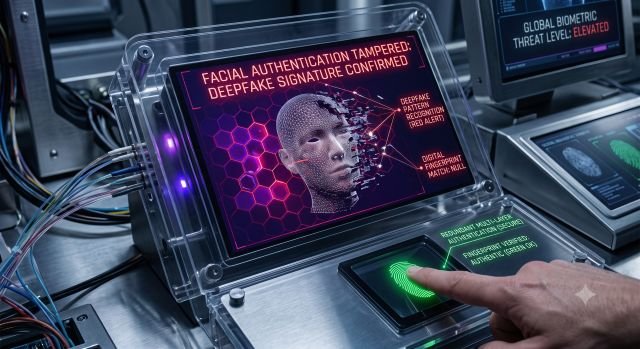
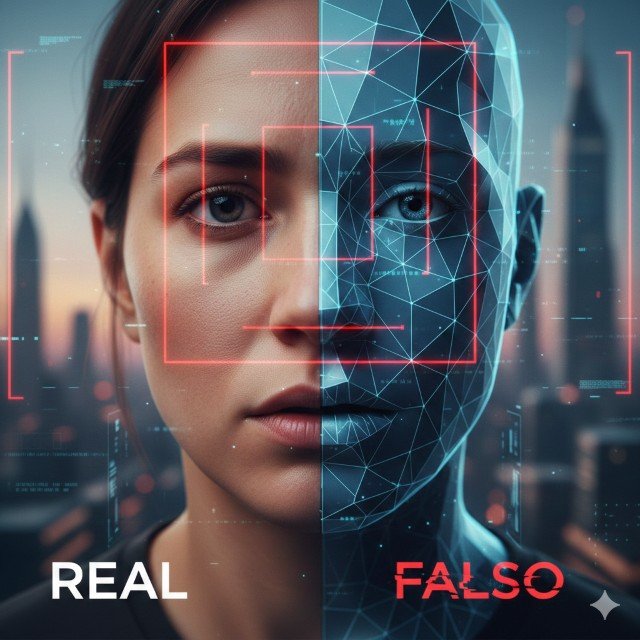
Frauds involving deepfakes have become a growing problem in Brazil, especially because the technology has evolved too quickly for traditional security systems to keep up. Today, criminals can manipulate videos and audio with enough precision to deceive relatives, employees, managers, and even facial authentication systems. Facial biometrics fail when confronted with hyper‑realistic videos, opening the door to increasingly sophisticated scams.
What Are the Main Types of Deepfake Frauds in Brazil?
Deepfake scams in Brazil have multiplied in recent years, with a 125% increase in 2025. One of the most common involves fake videos of relatives asking for money, usually sent through messaging apps. In these scams, the victim believes they are talking to someone close, but they are actually facing a simulation created by artificial intelligence.
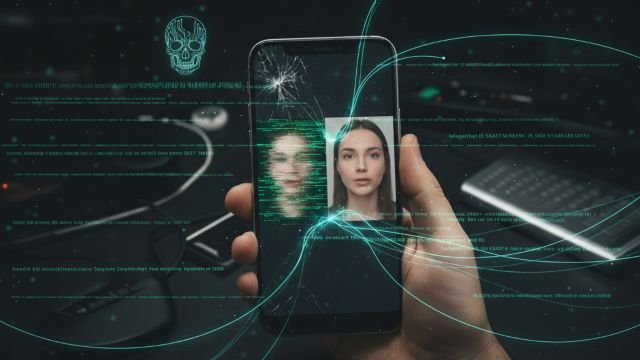
Another type of fraud occurs in banks, when criminals attempt to open accounts or access services using manipulated videos that imitate someone else’s face to fool facial biometrics. There are also extortion cases in which deepfakes are used to create fake scenes involving the victim, who is later blackmailed.
In corporate environments, the so‑called “CEO Fraud” has gained traction. Criminals clone the image and voice of executives to request urgent transfers or authorize internal access. There are also cases in recruitment processes, where candidates use deepfakes during job interviews, completely masking their identity. These scams became possible because many systems rely solely on facial biometrics, which fail when confronted with manipulated videos.
What Are the Main Data Security Risks Caused by Deepfakes?
The risks go far beyond financial losses, as deepfakes represent a direct threat to the integrity of personal and corporate data. One of the greatest dangers is digital identity theft, since criminals can impersonate real users to access bank accounts, social networks, and internal systems.
The breakdown of facial biometric authentication is another serious issue, as many apps still rely only on the phone’s camera, which cannot distinguish a real face from a simulation.
Additionally, deepfakes can facilitate unauthorized access to sensitive information within companies, as employees may be deceived by fake videos of managers requesting confidential data. There is also the risk of manipulating digital evidence, with fake videos used to incriminate individuals or alter narratives in legal disputes. In corporate environments, facial recognition‑based authentication systems become vulnerable, compromising both physical and digital access security.
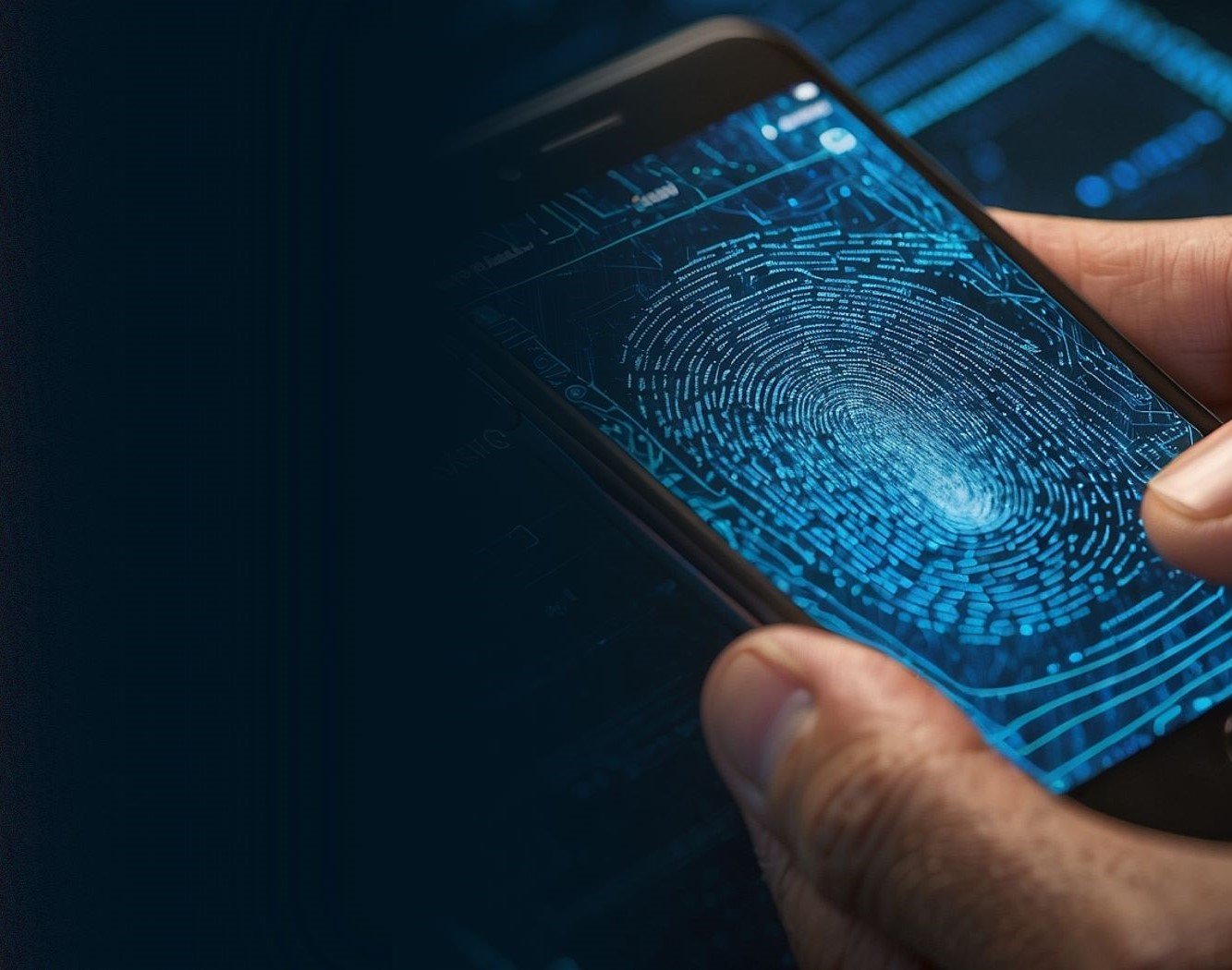
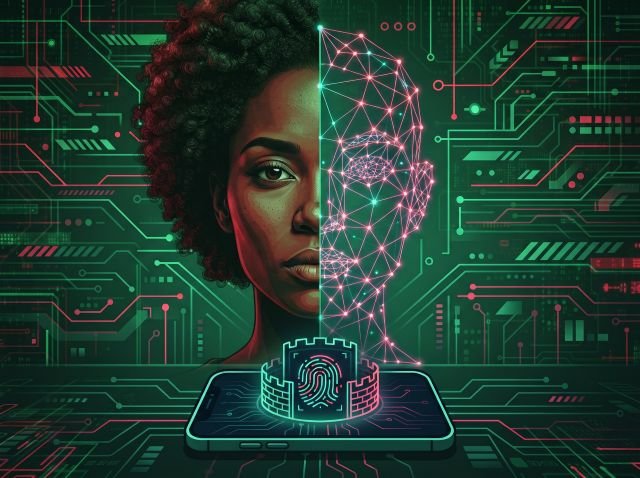
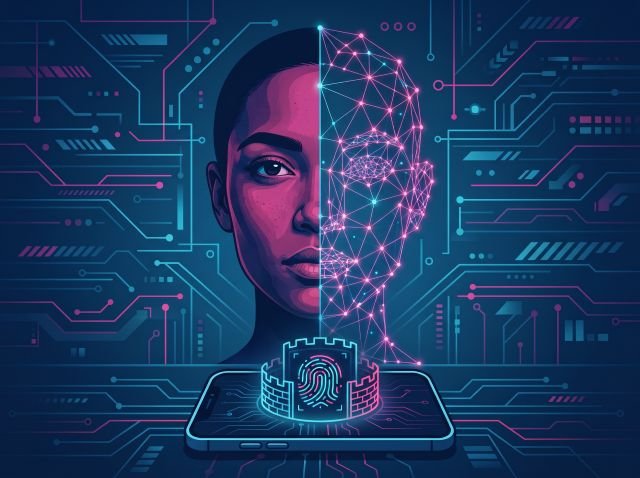
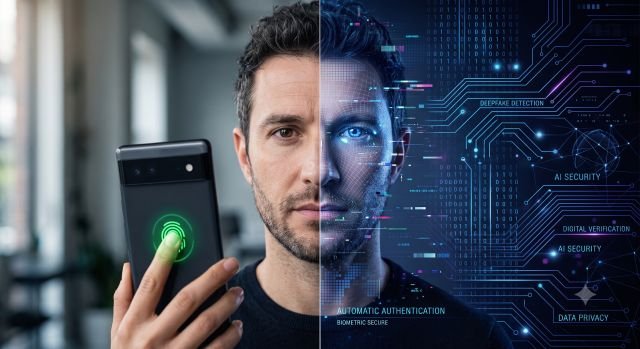
For this reason, demand is increasing for highly reliable biometric authentication, such as fingerprint‑based digital biometrics via mobile devices, which cannot be falsified through video.
Where Can I Find Real Examples of Deepfake Scams in Brazil?
Real cases have been widely reported by Brazilian media. One of the best‑known involves WhatsApp scams using cloned voices, where criminals send audio messages imitating relatives asking for money. There are also reports of attempts to open bank accounts using deepfake videos, prompting financial institutions to strengthen their security systems.
In companies, executives have had their images cloned in video calls, resulting in fake payment authorizations. Influencers have also been victims of manipulated videos simulating statements and behaviors that never occurred.
These examples show that the technology is advanced enough to deceive even close acquaintances, reinforcing the need for more robust biometrics that rely less on images.
What Biometric Options Exist to Combat Deepfakes?
Biometric technology has evolved precisely to address threats like deepfakes. Digital biometrics, based on fingerprints, is considered the most secure form of authentication, as it cannot be replicated through video or audio. Mobile fingerprint biometrics has become even more efficient with modern sensors and cameras capable of capturing prints with high precision.
Another option is iris biometrics, which is extremely difficult to falsify because it requires deep reading of ocular structures.
Voice biometrics has also evolved, incorporating liveness detection to identify patterns impossible for artificial intelligence to replicate. Additionally, behavioral biometrics analyzes typing patterns, movement, and device usage, making fraud more complex.
Among all these options, digital biometrics remains the most resistant to deepfakes, since people do not expose high‑resolution photos of their fingerprints on social media.
Where Can I Find Deepfake‑Proof Biometric Services?
In Brazil, several sectors already offer biometric services capable of resisting deepfakes. Financial institutions use digital biometrics to securely authenticate customers. Identity‑technology companies provide biometric verification APIs with real‑life liveness detection, analyzing depth, reflections, and micro‑expressions to identify manipulation.
Corporate security providers offer physical and digital access systems with multiple authentication layers, combining different types of biometrics.
Digital onboarding platforms also adopt advanced deepfake‑detection mechanisms, ensuring that only real users complete registration processes. When choosing a service, it is essential to verify whether it has international certifications and specific technologies for automatic manipulation detection.
Learn more about our deepfake‑proof mobile fingerprint biometric solutions on our website.
Is Digital Biometrics (Fingerprint Biometrics) Deepfake‑Proof?
Yes. Digital biometrics is considered the most secure biometric authentication method against deepfakes. Fingerprints cannot be replicated through video, and there is no such thing as a fingerprint deepfake, since the technology depends on unique physical patterns. The reading requires real contact with the sensor, preventing simulations. Modern sensors can identify even small variations in the skin, such as texture, depth, and pressure, making fraud virtually impossible.
While facial biometrics fail when confronted with manipulated videos, digital biometrics remain solid and reliable. Mobile fingerprint biometrics has evolved so much that it is now used in high‑level authentication processes, including in banks and technology companies.
Which Services Offer Automatic Deepfake Detection for Companies?
Companies seeking protection against deepfakes can rely on specialized solutions that include real‑life liveness detection, facial depth analysis, and identification of micro‑expressions impossible for artificial intelligence to reproduce. Facial verification platforms with anti‑deepfake AI compare real facial patterns with potential manipulations. Audio‑analysis tools detect variations that do not occur in synthetic voices. Digital security APIs used by banks and fintechs offer onboarding with multiple verification layers.
Additionally, corporate multifactor authentication solutions combine digital biometrics, behavioral biometrics, and facial biometrics with advanced detection, ensuring that only real users gain access to systems. These technologies help companies prevent fraud, protect data, and maintain the integrity of internal processes.
Read another article: What Is Deepfake and How Does It Affect Your Biometrics?