BLOG
Biometric Alternatives for Mobile Authentication

Biometric Alternatives for Mobile Authentication
Some questions always come up when discussing mobile biometrics: What is the best mobile biometric option? What solutions exist for mobile biometrics? This article aims to contribute to that discussion:
Mobile authentication has evolved from simple numerical passwords to sophisticated biometric-based systems. This transformation did not happen by chance: it responds to the rise in digital threats such as phishing, social engineering, spoofing, and phishing, in addition to the need for faster, more secure, and frictionless experiences. In a world where conversion rate, drop-off rate, and conversion rate optimization directly influence the success of apps and digital services, choosing the right biometric technology has become strategic.
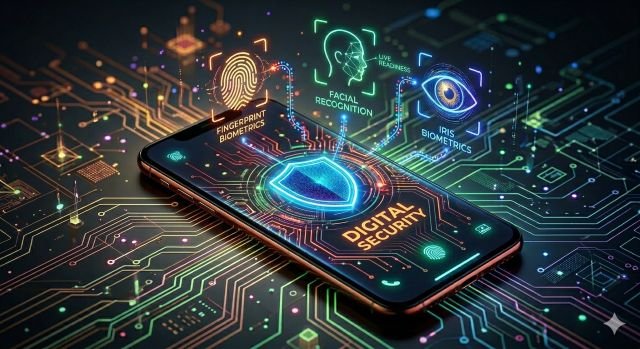
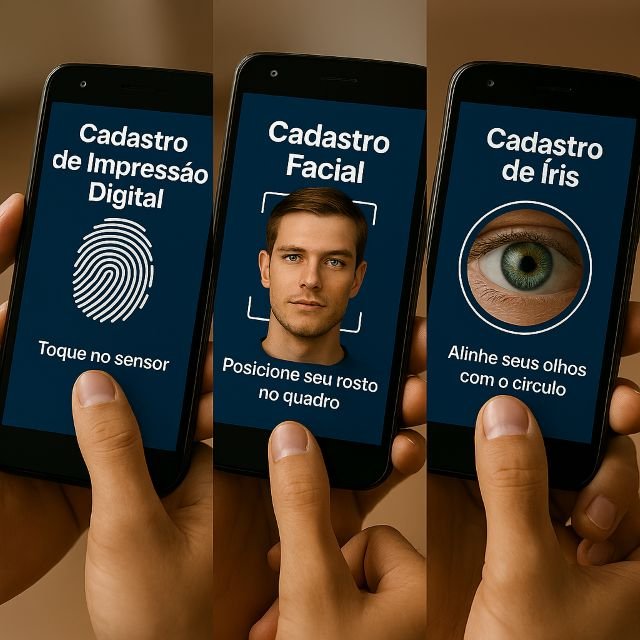
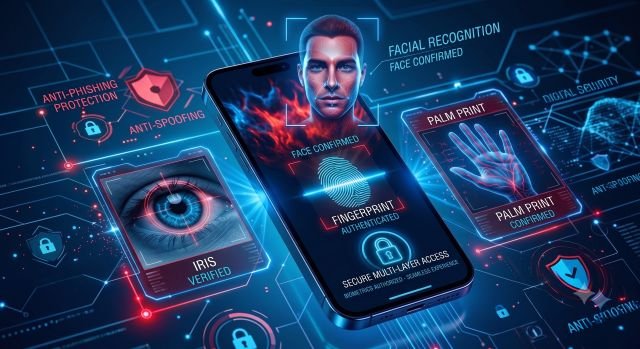
Today, four modalities stand out: facial biometrics, fingerprints (via sensor and camera), iris, and palm print. Each offers advantages and limitations that impact security, user experience, and the efficiency of the onboarding journey—whether in customer onboarding, digital onboarding, business onboarding, or app onboarding.
This article explores these technologies in depth, discusses their merits and challenges, explains concepts such as fallback, what fallback is, risk-based authentication, secure biometric, and FIDO2, and briefly presents how HA Tecno integrates advanced biometric solutions into its products.
The Importance of Biometrics in the Current Landscape
Biometrics has become essential because passwords are no longer enough. Phishing attacks and social engineering exploit human vulnerabilities, while spoofing techniques attempt to fool authentication systems. In this context, biometrics offers an additional layer of protection, reducing risks and increasing reliability.
Furthermore, companies seek frictionless experiences that reduce the drop-off rate during registration or login. In e-commerce, for example, efficient biometric authentication can boost the e-commerce conversion rate, directly impacting revenue.
Biometrics also integrates with risk-based authentication models, which adjust the level of security according to the risk of the transaction. In sensitive operations, the system can require a more robust secure biometric; in simple actions, it can allow a faster flow.
Facial Biometrics: Speed and Convenience
Facial biometrics has become one of the most popular forms of authentication. It combines speed, practicality, and high user acceptance.
How It Works
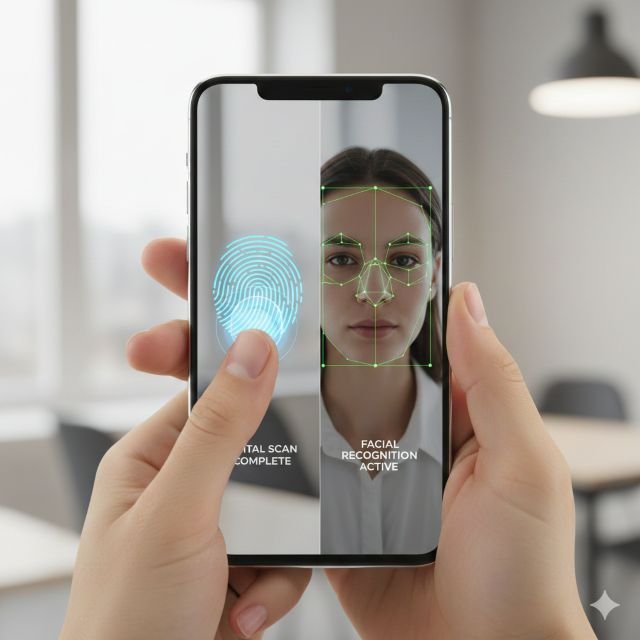
The system captures the user’s face and compares it with the registered template. Advanced technologies use infrared sensors and deep learning algorithms to prevent fraud via photos or videos, reducing the risks of spoofing and phishing.
Merits
- Frictionless experience: just look at the phone.
- High speed: almost instantaneous unlocking.
- Good integration with FIDO2: can be used as a strong factor in decentralized authentications.
- Reduction in drop-off rate: users prefer fast, effortless methods.
- Intuitive: easy to understand how to use.
Limitations
- Dependence on external lighting (affects image quality).
- Possibility of failures when wearing masks or accessories.
- Vulnerability in basic versions without 3D sensors.
- Accuracy may be reduced depending on ethnicity, gender, and age.
- Some users are bothered by privacy issues (especially when the captured image is larger than what is shown on screen).
Impact on Onboarding
Facial biometrics improves the onboarding journey, especially in digital onboarding and app onboarding, as it reduces manual steps and increases the conversion rate.
Fingerprints: Accuracy and Reliability
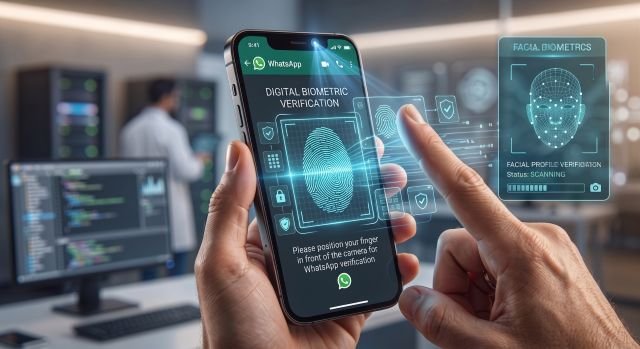
Fingerprinting remains one of the most reliable forms of authentication. It can be captured via a dedicated sensor or camera, broadening its use cases.
I – Fingerprints via Sensor
This is the most traditional and widely adopted method.
- How it works: Optical, capacitive, or ultrasonic sensors capture fingerprint details and compare them to the registered pattern.
- Merits: High accuracy and low error rate; strong resistance to spoofing; excellent for secure biometric in sensitive transactions; compatible with FIDO2 as a strong factor.
- Limitations: Dependent on skin condition; sensor wear over time; requires physical contact (which can be inconvenient in some contexts); does not allow access to the biometric image.
- Impact on conversion: Dedicated sensors reduce authentication failures, lowering the drop-off rate and increasing conversion rates in banking and e-commerce apps.
II – Fingerprints via Camera
A modern alternative that dispenses with dedicated hardware.
- How it works: The camera captures the finger’s image, and algorithms extract fingerprint patterns.
- Merits: Flexibility (works on any smartphone with a good camera); ideal for remote digital onboarding; reduces implementation costs; allows access to images and authentication against public databases; easy to use; accepted as legal evidence by courts.
- Limitations: Dependent on lighting; skin condition can limit accuracy.
- Applications: Excellent for customer onboarding in banks, fintechs, and companies that need to verify identity without requiring specific hardware, as well as in journeys demanding higher accuracy (e.g., credit approvals, app access recovery, contract sign-offs).
Learn more about HA Tecno’s Fingerprint Biometric solutions.
Iris Biometrics: Maximum Security
Iris recognition is one of the most secure biometric methods, ideal for environments requiring high protection.
- How it works: The infrared camera captures the unique patterns of the iris, which remain stable throughout a person’s life.
- Merits: Extremely high accuracy; spoofing resistance; excellent secure biometric for critical operations; good integration with risk-based authentication.
- Limitations: Less convenient day-to-day; sensitivity to glasses and contact lenses; requires specialized hardware; sensitive to ambient lighting; few reliable market options.
- Impact on onboarding: Although more secure, it can increase friction and raise drop-off rates if used in low-criticality workflows.
Palm Print: Palm Recognition Biometrics
Palm recognition has been gaining ground, particularly in remote authentication.
- How it works: The camera captures the lines, patterns, and geometry of the palm. Advanced versions analyze internal veins.
- Merits: Large capture area; contactless convenience; good accuracy; excellent for remote onboarding.
- Limitations: Dependent on lighting; spoofing risk in basic versions; less standardization across mobile devices.
- Applications: Ideal for digital onboarding, remote authentication, and corporate systems seeking contactless security.
Fallback: What It Is and Why It Matters
In any biometric system, failures can occur. That is where fallback comes in.
- What fallback is: Fallback is the alternative authentication method used when biometrics fail. It can be a password, PIN, token, or another factor.
- Why it matters: Prevents user frustration; reduces drop-off rates; maintains a smooth experience; ensures journey continuity even under adverse conditions.
A good fallback system is essential for conversion rate optimization, especially in e-commerce and banking apps.
Risk-Based Authentication and Secure Biometrics
Risk-based authentication adjusts the security level according to the context of the operation.
How It Works
The system evaluates factors such as:
- Location
- User behavior
- Transaction type
- Access history
If the risk is low, it allows a frictionless experience. If high, it requires a more robust secure biometric, such as iris or sensor-based fingerprint. This approach enhances security without harming the conversion rate.
FIDO2 and the Future of Authentication
The FIDO2 standard promotes strong authentication without relying on passwords. It combines biometrics with cryptographic keys stored on the device.
- Benefits: Reduces phishing risks; eliminates weak passwords; boosts app and service security; improves user experience.
Biometrics such as facial and fingerprint recognition integrate seamlessly with FIDO2, creating fast and secure workflows.
HA Tecno’s Solution
HA Tecno provides advanced biometric solutions for remote authentication, digital onboarding, and identity verification. Its technologies include facial recognition, camera-based fingerprinting, and palm print, focusing on security against phishing, social engineering, and spoofing.
The company stands out for its ability to operate under varying lighting conditions, its robustness against fraud, and its integration with risk-based authentication models—reducing drop-off rates and increasing conversion rates in business onboarding, app onboarding, and e-commerce processes.
Conclusion
Mobile biometric authentication has evolved to meet demands for security, user experience, and operational efficiency. Technologies such as facial recognition, fingerprinting, iris scanning, and palm print offer varying levels of protection and convenience, directly impacting the onboarding journey, conversion rates, and protection against phishing, social engineering, and spoofing.
Choosing the ideal technology depends on balancing security with smoothness. Modern solutions, such as those from HA Tecno, demonstrate that it is possible to combine multiple biometric modalities, integrate FIDO2, apply risk-based authentication, and deliver truly frictionless experiences without compromising security.