What is KYC?
This acronym is widely mentioned in the cybersecurity field: KYC, short for Know Your Customer, is a set of procedures used to verify a user’s identity before they gain access to financial services, digital platforms, or any environment that requires enhanced security. Although the term originated in the banking sector, it has expanded to nearly every segment that deals with sensitive data, online transactions, and fraud prevention. Below, you’ll find an article on the topic with answers to the most common questions.
How does KYC work and why is it essential for digital security?
KYC acts as a protective barrier that prevents malicious individuals from accessing services using fake identities. It requires users to prove who they are, usually through official documents, selfies, videos, or digital biometrics. In a scenario where digital scams grow daily, KYC has become one of the main digital security tools because it drastically reduces the risk of fraud, money laundering, and unauthorized access.
Digital security depends on processes that accurately confirm a user’s identity. KYC fulfills this role by combining digital recognition, document analysis, and increasingly, fingerprint biometrics through mobile devices. This combination creates a protective layer that prevents criminals from using stolen data to open accounts, request loans, or perform fraudulent transactions.
What is the role of biometrics in KYC?
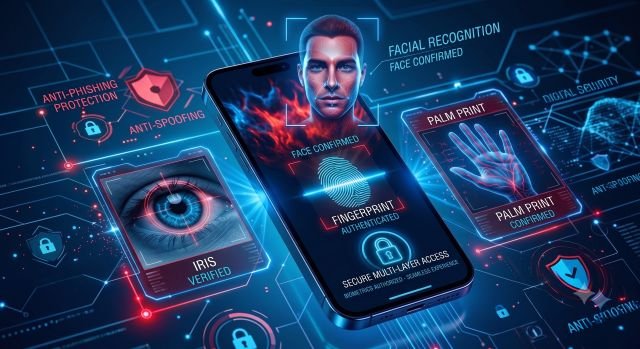
Digital biometrics has become one of the pillars of modern KYC. It allows companies to verify a user’s identity based on unique characteristics such as fingerprints, facial features, or voice. Fingerprint biometrics through mobile devices, for example, has made the process faster and more accessible, since users don’t need special equipment to prove who they are.
The role of biometrics in KYC goes beyond simple verification. It increases the accuracy of digital recognition, reduces false positives, and prevents fraudsters from using forged documents or synthetic identities. In sectors like banking, fintech, and e-commerce, experts already consider digital biometrics one of the safest forms of authentication.
Want to learn more about our mobile digital biometrics solutions? Visit our website.
How is KYC implemented in practice?
In practice, KYC is implemented as a continuous process that begins at the user’s first interaction with a platform and extends throughout their relationship with the company. Implementation involves three major phases: data collection, verification, and monitoring. Each phase uses digital security technologies, digital recognition, and increasingly, digital biometrics to ensure that the identity presented is legitimate.
Data Collection
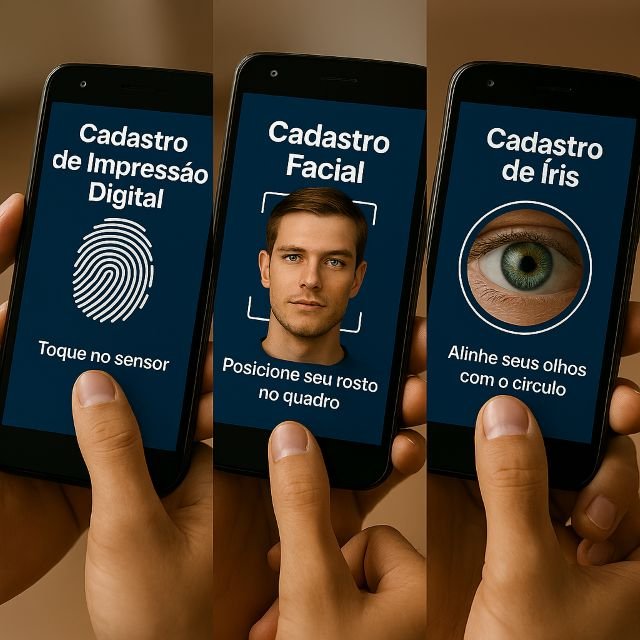
The first phase is data collection. When a user creates an account or requests access to a service, the platform asks for basic information such as name, ID number, address, and date of birth. It then requests official documents such as an ID card, driver’s license, or passport. This step is usually done directly through a mobile device, with the user photographing the documents and sending the images. Fingerprint biometrics through mobile devices may also be used at this stage, especially in banks and fintechs that integrate the smartphone’s biometric sensor into the onboarding process.
After collection, verification begins. Here, technology plays a more intense role. Digital recognition systems analyze the submitted documents, checking whether they are authentic, unaltered, and consistent with official databases. The selfie or liveness video is compared with the photo on the document, ensuring that the person registering is indeed the rightful owner of the identity. Digital biometrics reinforces this step because characteristics such as fingerprints, facial patterns, and natural movements are extremely difficult to forge.
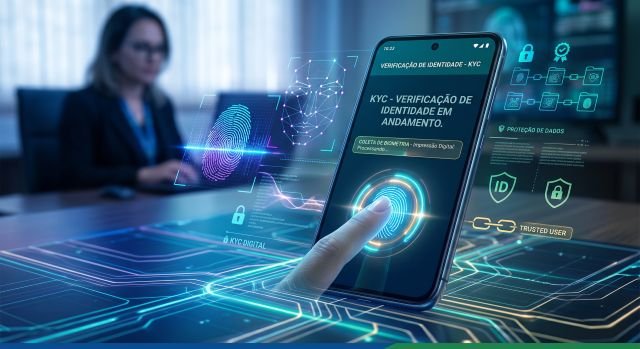
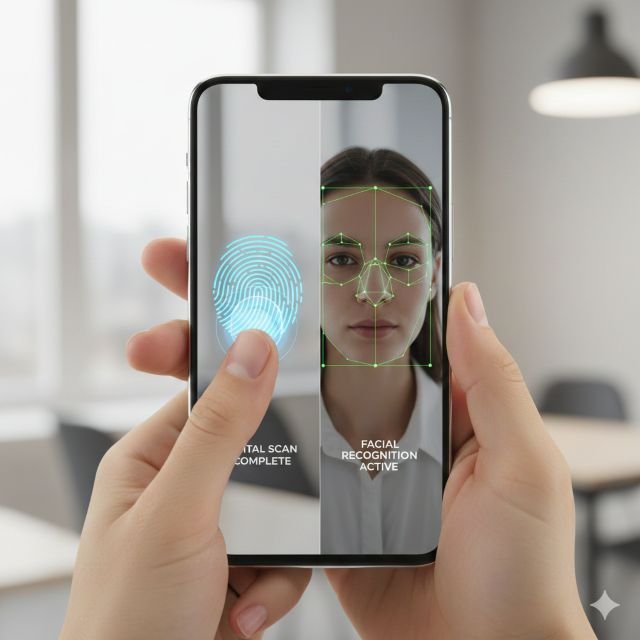
Biometric verification has become one of the strongest points of modern KYC. When the user places their finger on the mobile sensor, the system compares the fingerprint with previous records or encrypted biometric patterns. This prevents anyone from impersonating another person using stolen documents. Fingerprint biometrics through mobile devices also reduces fraud involving social engineering, since even if a criminal obtains the password, they cannot replicate the fingerprint.
Continuous Monitoring
After initial verification, KYC enters the continuous monitoring phase. This step is essential because digital security does not depend solely on initial validation. Companies monitor user behavior over time, analyzing access patterns, transactions, and interactions. If the system detects something unusual, such as a login from another country or an abnormal transaction attempt, it may request new biometric verification or updated information. This monitoring is part of what is known as continuous KYC, ensuring that the identity remains trustworthy throughout the user’s journey.
In sectors such as banking and brokerage, KYC also includes cross-checks with watchlists, such as international sanctions lists, politically exposed persons (PEP) registries, and fraud databases. This prevents individuals involved in illicit activities from using financial services to launder money or hide assets.
How can KYC be used in different sectors?
KYC has adapted to various sectors, each with specific needs. In the financial sector, it is mandatory for opening accounts, requesting credit, and making investments. Digital biometrics ensures that only the account holder can move money, reducing fraud and increasing digital security.
In e-commerce, KYC helps validate buyers and sellers, preventing scams in marketplaces. Digital recognition prevents the creation of fake profiles used to commit fraud in listings or payments.
In the healthcare sector, KYC ensures that access to electronic medical records is granted only to authorized patients and professionals. Fingerprint biometrics through mobile devices facilitates secure access to sensitive medical information.
Telecommunications companies use KYC for SIM activation and plan contracting. This prevents criminals from using phone lines for scams, such as the well-known WhatsApp fraud.
Even the education sector has adopted KYC to validate students in distance learning platforms during exams and other activities.
What types of fraud does KYC help prevent?
KYC helps prevent a wide range of fraud that has become common in the digital environment. It prevents account openings with fake documents, stops criminals from using stolen identities, and reduces the risk of money laundering. In payment platforms, KYC blocks suspicious transactions and prevents scammers from using cloned cards.
Digital biometrics is especially effective against identity fraud. Since each person has unique biometric characteristics, digital recognition prevents someone from impersonating another person using photos, manipulated videos, or altered documents.
Fingerprint biometrics through mobile devices also combats access fraud, as the smartphone sensor recognizes only the authorized user’s finger. This prevents criminals from entering bank accounts or payment apps even if they have obtained the password.
What famous cases show how KYC helped prevent fraud?
Several well-known cases demonstrate how KYC has become essential for digital security. In 2022, a major Brazilian fintech avoided a multimillion-dollar scam when its digital recognition system identified inconsistencies in a selfie sent by a fraudster. Biometric analysis detected digital manipulation of the image and blocked the account opening.
In another case, a telecom operator prevented the activation of dozens of SIM cards used for social engineering scams. KYC required digital biometrics and valid documents, thwarting the attempt to create fake lines for messaging app scams.
In the banking sector, criminals attempted to request loans using synthetic identities. The KYC system detected that the fingerprints submitted did not match official records, preventing losses that could have exceeded millions of reais.
These cases reinforce how KYC, combined with fingerprint biometrics through mobile devices, has become an indispensable tool for protecting companies and users.
FAQ – Frequently Asked Questions about KYC and Digital Biometrics
Is KYC mandatory? Yes, in sectors such as banking and telecommunications. In other areas, it is used to enhance digital security.
Is digital biometrics secure? Yes. It uses unique user characteristics, making digital recognition highly reliable.
Can KYC be done entirely through a mobile device? Yes. Fingerprint biometrics through mobile devices and digital document submission have made the process fully remote.
Does KYC slow down the process? No. With modern technologies, verification is fast and usually takes just a few minutes.
Does KYC protect against identity fraud? Yes. It is one of the main tools to prevent criminals from using stolen data.