BLOG
What Is Multimodal Biometrics and Why Does It Matter?

What Is Multimodal Biometrics and Why Does It Matter?
1. Concept and technical foundations
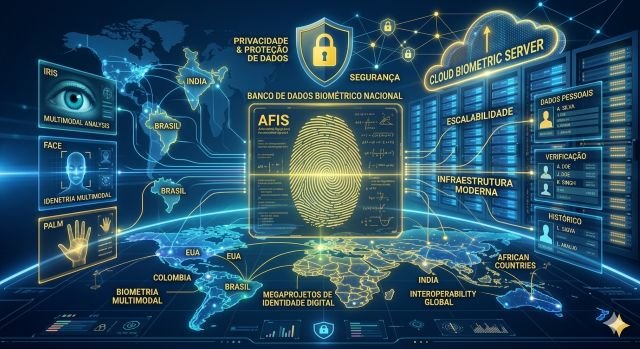
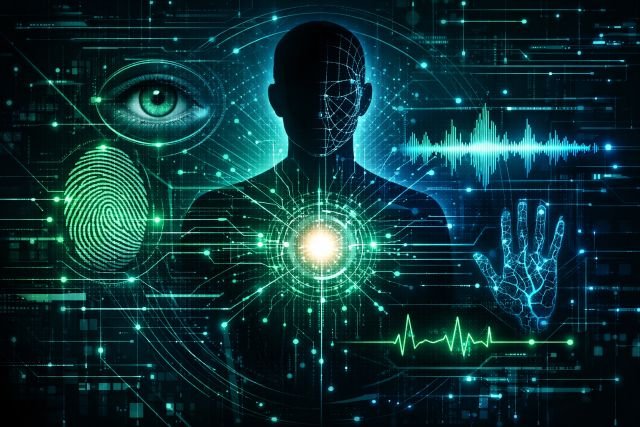
Multimodal biometrics integrates multiple biometric attributes — such as iris, fingerprint, facial recognition, voice, and behavioral patterns — into a single authentication process. This approach improves accuracy, resilience, and resistance to spoofing attacks, especially when compared to unimodal systems.
From a technical perspective, fusion can occur at three levels:
• Sensor: combination of raw data (e.g., RGB + IR camera).
• Feature: merging biometric vectors into a unified template.
• Decision: each modality generates a score, and the system consolidates the final result using rules or machine‑learning models.
This architecture reduces variability, improves performance in noisy environments, and increases operational reliability.
2. Relevance to cybersecurity
Unimodal systems are vulnerable to forgeries, deepfakes, 3D‑printed replicas, and environmental variations. Multimodality requires corroboration between multiple biological signals, making attacks significantly more expensive and complex.
For security teams, this means:
• Reduced attack surface.
• Lower dependence on passwords.
• Strengthening of Zero Trust architectures.
• More robust authentication for privileged access.
3. Typical architecture
- Capture by independent sensors.
- Pre‑processing and liveness detection.
- Feature extraction.
- Multimodal fusion.
- Template matching.
- Final decision.
The liveness detection stage is critical, involving depth analysis, micro‑textures, eye reflections, thermal variation, heartbeat signals, and voice modulation.
4. Real‑world use journeys
4.1. High‑risk remote authentication
Digital onboarding, VPN access, and remote identity validation combine face, voice, fingerprint, and document verification, reducing synthetic fraud and deepfake‑based attacks.
4.2. Physical access control in critical environments
Datacenters and vault rooms use hand‑vein + iris or fingerprint + hand geometry, ensuring accuracy even with gloves, dirt, or operational stress.
4.3. Continuous authentication on endpoints
Advanced systems monitor typing dynamics, mouse patterns, and micro‑expressions, continuously revalidating the user — ideal for SOCs and privileged accounts.
5. Conclusion and global outlook
Multimodal biometrics is no longer just a trend — it is becoming critical infrastructure. The global market was estimated at US$ 3.67 billion in 2024, with a projected compound annual growth rate (CAGR) of 14.5% through 2030, according to Grand View Research. Other reports indicate even faster expansion, projecting the sector to reach US$ 9.9 billion by 2030, driven by 27.6% annual growth between 2024 and 2030.
This growth reflects increasing adoption across government, finance, healthcare, transportation, and high‑security corporate environments. For cybersecurity professionals, keeping up with this evolution is essential — not only because of the technology itself, but due to its direct impact on how identities will be validated in the coming years.