
Blog
Multimodal Biometrics as a Response to New Privacy Regulations


Claro, Henrique — aqui está a tradução completa para o inglês do artigo dividido em seções, mantendo o tom técnico e natural:
Multimodal Biometrics as a Response to New Privacy Regulations
1. A New Regulatory Landscape
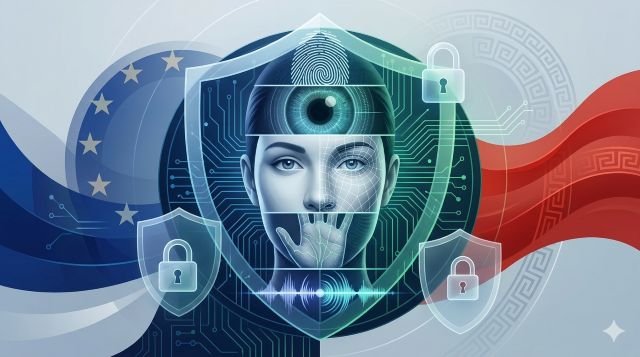
In recent years, the debate around digital privacy has intensified, driven by stricter regulations both in the European Union and in China. Although each region has its own motivations, both share a common goal: limiting the indiscriminate use of biometric data and strengthening citizens’ control over their identities. This more demanding regulatory environment has accelerated the adoption of multimodal biometric architectures capable of balancing accuracy, security and informed consent.
2. Limitations of Unimodal Biometrics
Systems based on a single biometric attribute—such as fingerprints, facial recognition or iris scans—face significant challenges. Relying on only one identifier increases the risk of misuse, complicates the application of anonymization techniques and reduces the flexibility of authentication mechanisms. In addition, in complex operational environments, capture quality can vary, compromising accuracy. These factors make unimodal biometrics less compatible with regulations that require data minimization and clear justification of purpose.
3. Multimodality as a Technical and Regulatory Response
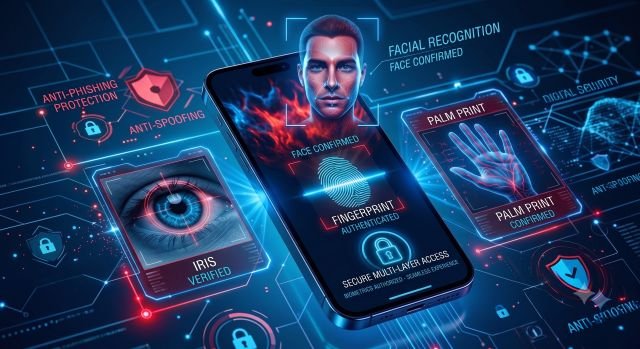
Multimodal biometrics combines different characteristics—such as face, fingerprint, iris, palm or voice—allowing identity systems to adapt to legal and operational requirements. This approach enables strategies such as “cancelable biometrics,” in which one attribute can be replaced by another without compromising the user’s identity. This reduces the impact of data breaches and facilitates compliance with principles of proportionality and informed consent.
4. European Union: GDPR and the AI Act as Drivers of Change
In the European Union, the GDPR and the AI Act have created an environment in which any use of biometrics must be strictly justified. Data collection must be minimal, the purpose must be transparent and citizens must have mechanisms for revocation. Multimodality allows systems to adjust which attributes are collected, stored or discarded, creating architectures more aligned with expectations of governance and data protection.
5. China: PIPL and the Control of Facial Recognition
In China, the Personal Information Protection Law (PIPL) has imposed clearer limits on the use of facial recognition, especially in public spaces. The requirement for explicit consent has led companies and government agencies to adopt multimodal solutions to reduce dependence on a single identifier and improve accuracy in dense urban environments, where facial capture can be affected by lighting, angle or obstructions.
6. Technical Benefits of Multimodality
Beyond regulatory compliance, multimodality offers important operational advantages:
- Greater resilience against presentation attacks, such as deepfakes or 3D masks.
- Dynamic selection of the best available attribute, depending on context and consent level.
- Modular data storage, allowing information to be distributed across layers and hashed differently for each modality.
These elements make systems more secure and less vulnerable to failures or fraud attempts.
7. Conclusion: An Inevitable Path
As regulations become more stringent, multimodal biometrics is no longer just a technological evolution but a strategic response. It combines accuracy with governance, security with respect for individual rights and establishes a more sustainable foundation for digital identity at a global scale.
Se quiser, posso revisar o texto para deixá‑lo mais formal, mais técnico ou mais fluido para publicação internacional.