Blog
Losses Caused by Friction in Facial Biometrics in Retail: Statistics, Impacts, and Key Reasons

Losses Caused by Friction in Facial Biometrics in Retail: Statistics, Impacts, and Key Reasons
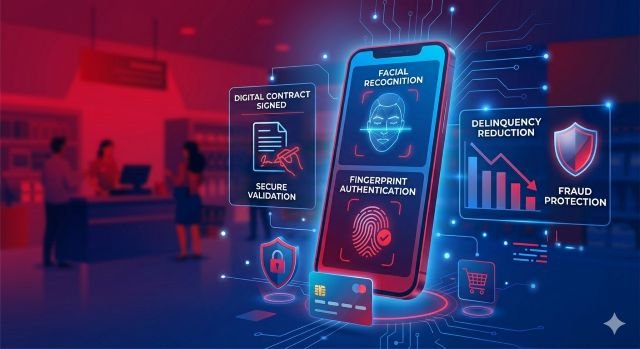
The adoption of facial biometrics in digital retail and e‑commerce is growing rapidly, driven by the need to reduce fraud, speed up customer journeys, and improve the omnichannel customer experience. However, alongside its benefits, an often overlooked challenge emerges: losses caused by biometric friction, meaning facial recognition failures that prevent users from completing a purchase, login, or accessing a service.
These losses can be far greater than most companies realize, especially in high‑volume mobile apps, such as e‑commerce platforms, digital payments, and marketplaces.
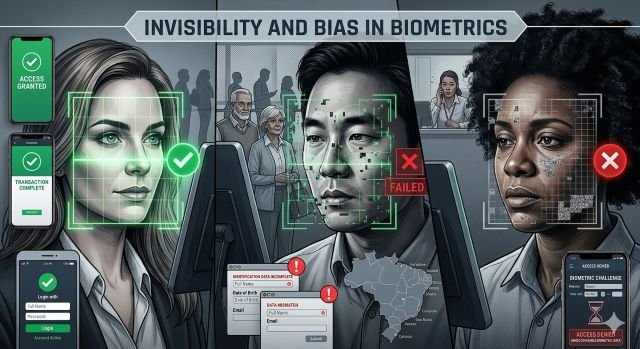
People who wear glasses, face poor lighting conditions, or belong to underrepresented ethnic groups often struggle with facial recognition from the onboarding process all the way to checkout. Do you measure this? Tracking these metrics is essential to understanding the ROI of facial biometrics and its impact on conversion rates.
Average Failure Rates per Attempt
Market studies and benchmarks from global biometric technology providers show that facial recognition accuracy varies according to lighting, camera quality, demographic diversity, and algorithmic models. On average, retail operations observe:
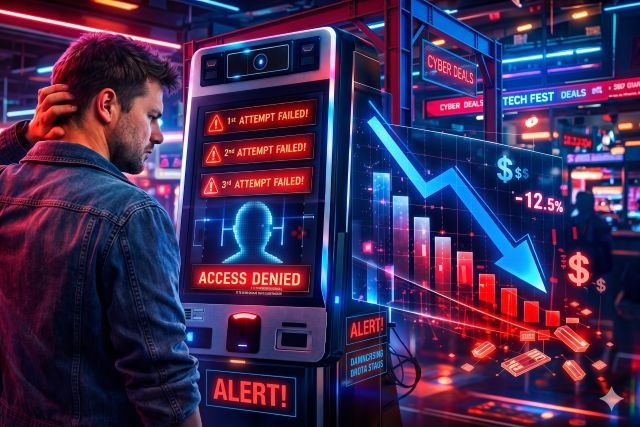
First Attempt
Failure rate between 8% and 12% — highly sensitive to face angle, customer rush, and environmental interference. In high‑traffic stores, this can reach 15%.
Second Attempt
Failure rate between 3% and 5%, even after repositioning or additional instructions.
Third Attempt
Failure rate between 1% and 2%, often resulting in cart abandonment, user frustration, or the need for human intervention.
Across all attempts, retailers face a final failure rate between 2% and 5%, representing significant direct and indirect losses in large‑scale operations.
Financial Impact of Biometric Friction
Biometric friction generates losses in three main areas:
1. Lost Sales and Lower Conversion Rates
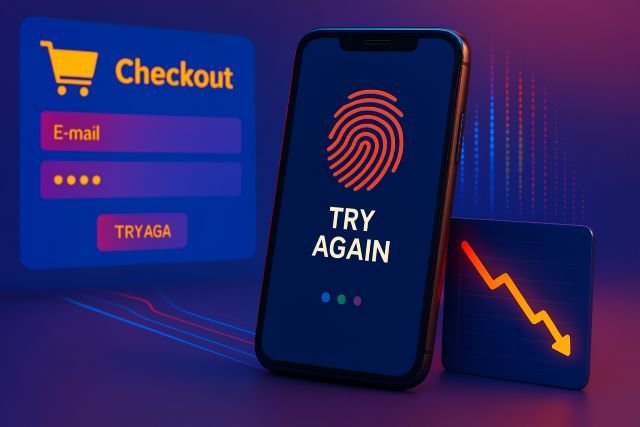
Up to 30% of customers who fail facial recognition do not return to the checkout flow, resulting in immediate revenue loss.
2. Increased Operational Costs
Each failure requires human support, reducing the efficiency of self‑checkout systems and increasing operational costs by up to 12% during peak hours.
3. Damage to Customer Experience and Brand Perception
Around 40% of consumers avoid using facial biometrics again after a frustrating experience, slowing down technology adoption and harming brand trust.
Main Causes of Facial Recognition Failures
- Poor lighting conditions in stores or mobile environments
- Facial obstructions (masks, hats, sunglasses) — responsible for up to 35% of failures
- Low‑quality cameras or poorly positioned sensors
- Algorithmic bias and lack of demographic diversity in training datasets
- Customer rush, leading to movement and improper positioning
- Onboarding issues, such as outdated or poorly captured photos
- Use of glasses, which often forces users to remove them, making it harder to read instructions and restarting the process
Conclusion
Facial biometrics in retail and e‑commerce is a powerful technology, but its success depends on addressing operational friction, user experience (UX), and data security. Reducing first‑attempt failures, investing in high‑precision algorithms, and training models with real demographic diversity are essential steps to minimize losses and increase conversion.
Retailers that balance security, convenience, and digital experience will gain the most from this innovation.